
The shift from managing to empowering
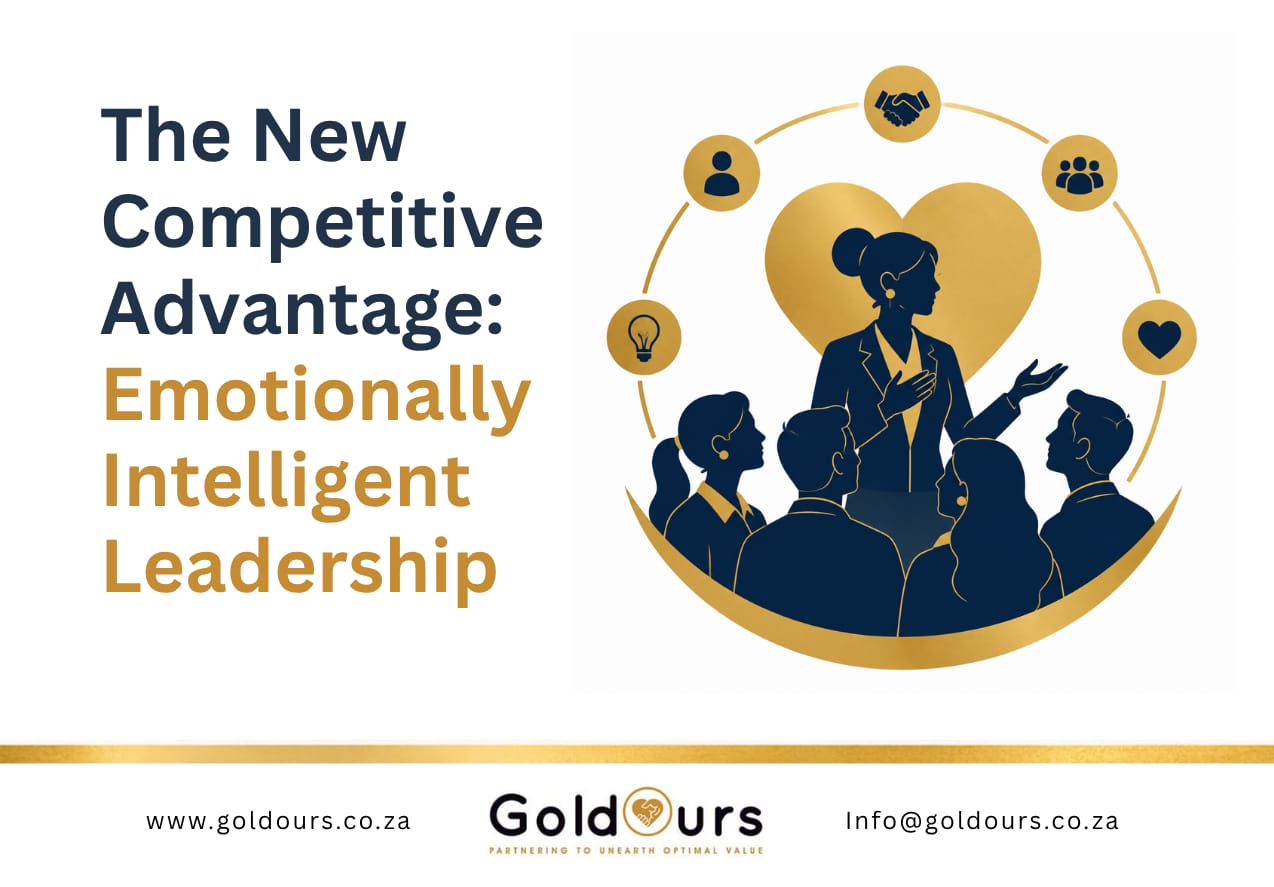
Stop managing people. Start empowering leaders. The old "command and control" model stifles innovation and disengages talent. At GoldOurs, we see the future of leadership as coaching your team for high-impact execution.
Typical for-profit businesses – from small start-ups to major corporations – measure success through demonstrated revenue and profits (Blank and Dorf, 2012). In contrast, impact-driven businesses prioritise decisions, effort and resources based on the impact the work is having, understanding that profitability may be less as a result (Shaw, 2022). Success for impact-driven businesses lies in balancing measurable impact improvements with financial performance.
So what is high-impact coaching? Impact coaching, according to the US coaching firm Evolve Impact, aims to support leadership authenticity, openness, and coordination among siloed business units, and to integrate profit-and-purpose initiatives throughout the organisation’s culture.
Nearly 50% of younger workers don’t believe their company will survive another 10 years if there isn’t a significant change.
Let’s take a closer look at the key strategies for high-impact execution coaching:
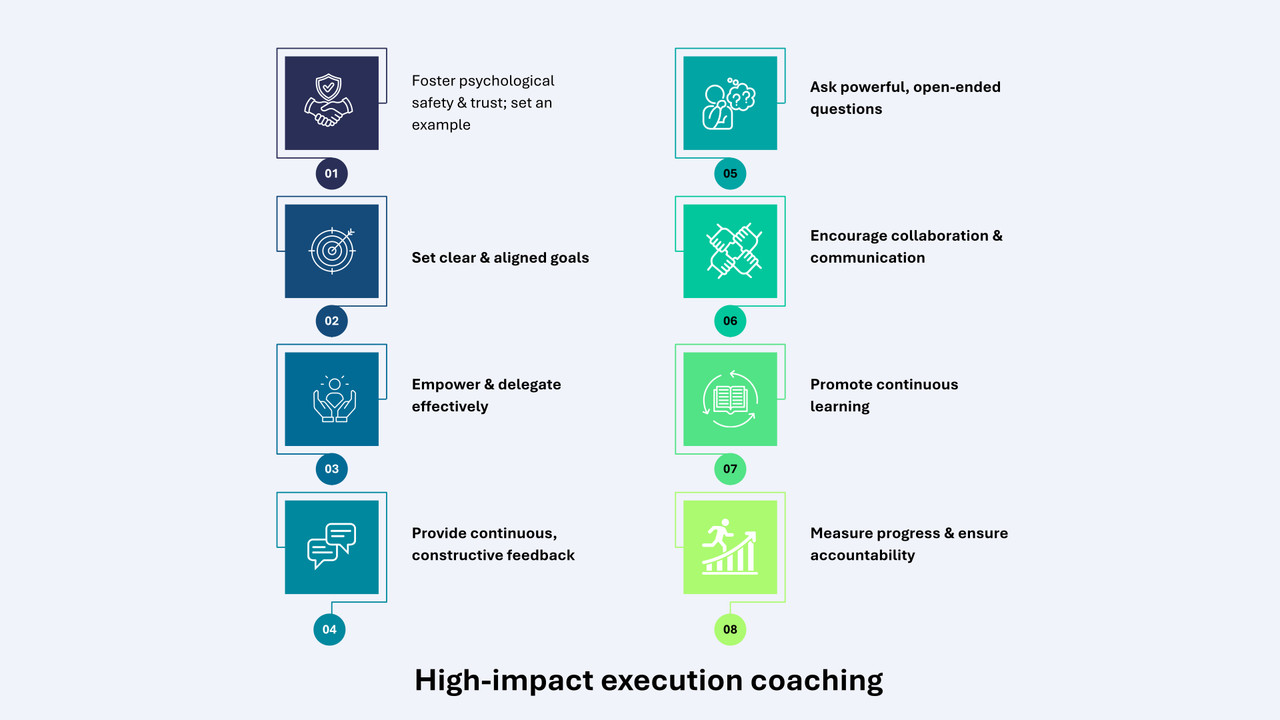
- Foster psychological safety and trust; set an example: Create an environment where team members feel safe to share ideas, ask questions, admit mistakes, and take calculated risks without fear of retribution. Building trust through honesty, transparency, and empathy is foundational, so model the behaviours you expect from your team.
- Set clear, aligned goals: Ensure every team member understands their role and how their tasks contribute to the organisation's overarching strategic objectives. Use frameworks like SMART goals (Specific, measurable, attainable, relevant, time-bound) or OKRs (Objectives and key results) to provide clarity and direction.
- Empower and delegate effectively: Avoid micromanaging; instead, delegate meaningful responsibilities that play to employees' strengths and offer "stretch opportunities" for growth. Provide the necessary resources, support, and autonomy, and be willing to let them learn from failure.
- Provide continuous, constructive feedback: Move away from annual reviews to a rhythm of regular, informal check-ins. Feedback should be specific, actionable, and focused on behaviours rather than personality. The "70-30 rule" suggests aiming for 70% positive reinforcement and 30% growth-focused feedback.
- Ask powerful, open-ended questions: Encourage critical thinking and problem-solving by asking questions that prompt self-discovery, rather than immediately providing answers. Examples include:
- "What's your initial thinking on this?"
- "What options are you considering?"
- "What would success look like in this scenario?"
- Encourage collaboration and communication: Facilitate an open dialogue that values diverse perspectives, fostering innovation and creative problem-solving. Leverage collaboration tools and cross-functional projects to strengthen working relationships and knowledge sharing.
- Promote continuous learning: Foster a culture that sees challenges as opportunities to learn and grow. Invest in professional development through workshops, peer-to-peer learning, and mentorship programs to build a resilient and adaptable team.
- Set an example: Model the behaviours you expect to see in your team. Your own actions, such as staying calm under pressure, seeking feedback, and maintaining a strong work ethic, significantly influence team culture and engagement.
- Measure progress and ensure accountability: Use clear metrics (KPIs, OKRs) to track progress toward goals. Establish a regular accountability cadence, such as weekly "WIG" (wildly important goals) sessions, in which the team reviews the scoreboard, shares progress, and sets new commitments.