
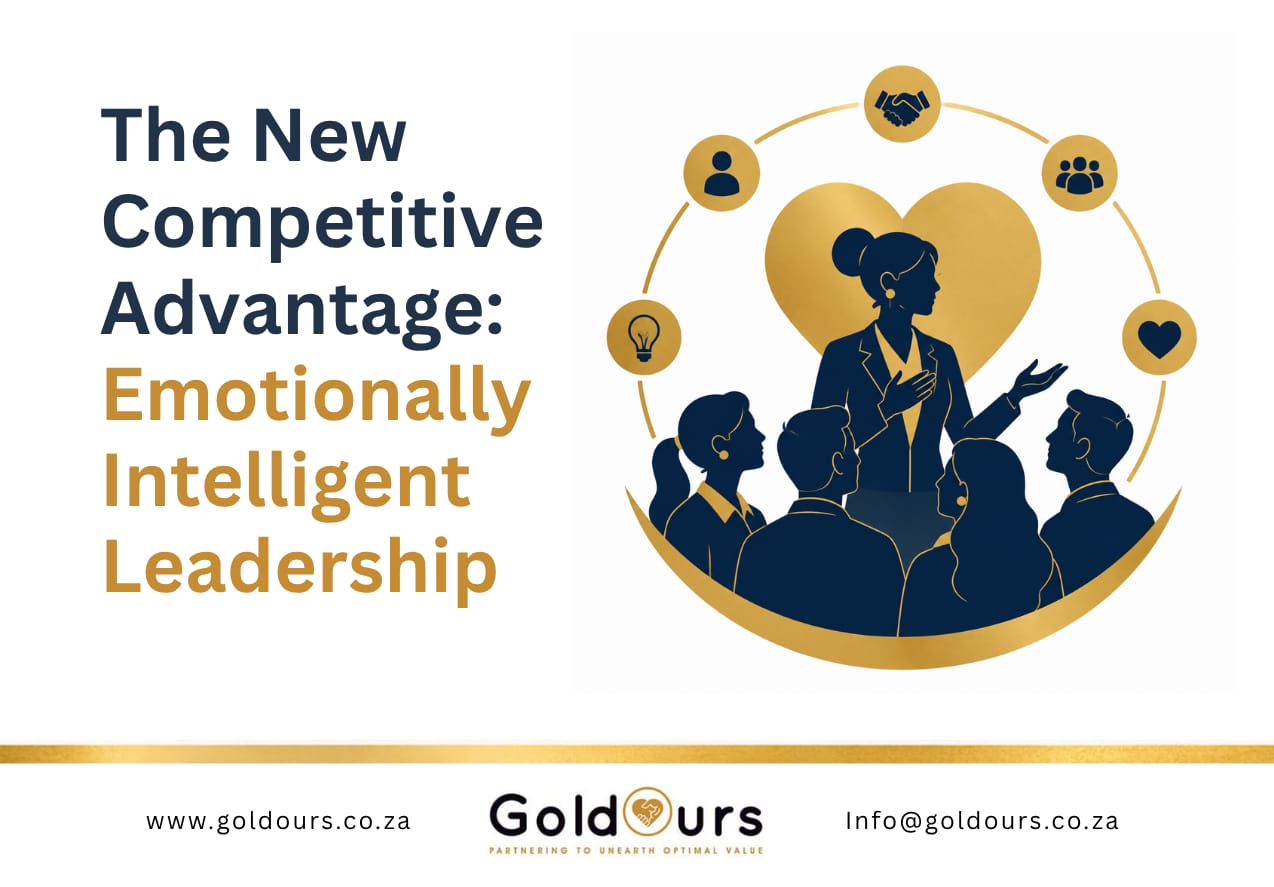
The new competitive advantage: Emotionally intelligent leadership
Organisations compete through their products, technology, expertise and ability to respond to change. But increasingly, their advantage also depends on something less easily replicated: the quality of leadership experienced by their people.
Employees want more than instructions, targets and performance reviews. They want to feel heard, respected and connected to the purpose of their work.
When leadership remains purely transactional, that connection is easily lost.
When leadership becomes an exchange
Transactional leadership focuses primarily on what employees must deliver and what they receive in return.
Clear expectations and performance measures are important. But when every interaction centres on tasks, deadlines and results, employees can begin to feel managed as resources rather than valued as people.
Leaders may achieve short-term compliance while gradually losing commitment. Employees do what is required, but contribute fewer ideas, take less initiative and become less willing to go beyond their formal responsibilities.
The result is a workforce that may be present and productive, but not fully engaged.
Emotional intelligence strengthens engagement
Emotionally intelligent leaders recognise that performance is shaped by human experience.
They are aware of how their behaviour affects others. They listen carefully, respond constructively and adapt their communication to different people and circumstances. They can address difficult issues without diminishing the individual and remain composed when pressure is high.
This does not mean avoiding accountability or lowering performance standards.
It means understanding how to create the trust and psychological safety employees need to speak honestly, solve problems and contribute at their best.
Developing human-centred leaders
Emotional intelligence is not simply an inherent personality trait. It is a leadership capability that can be developed.
Leaders can learn to become more self-aware, manage their responses, listen with greater intention and approach performance conversations with both clarity and empathy.
When these capabilities are embedded across an organisation, employees feel more connected to their leaders and to the organisation itself. Engagement strengthens, collaboration improves and people are more likely to remain committed through periods of pressure and change.
At GoldOurs, we help organisations develop human-centred leaders who combine emotional intelligence with clear expectations and strong performance leadership.
Because the organisations that succeed will not only be those with the best strategies. They will be those whose leaders know how to bring out the best in people.