
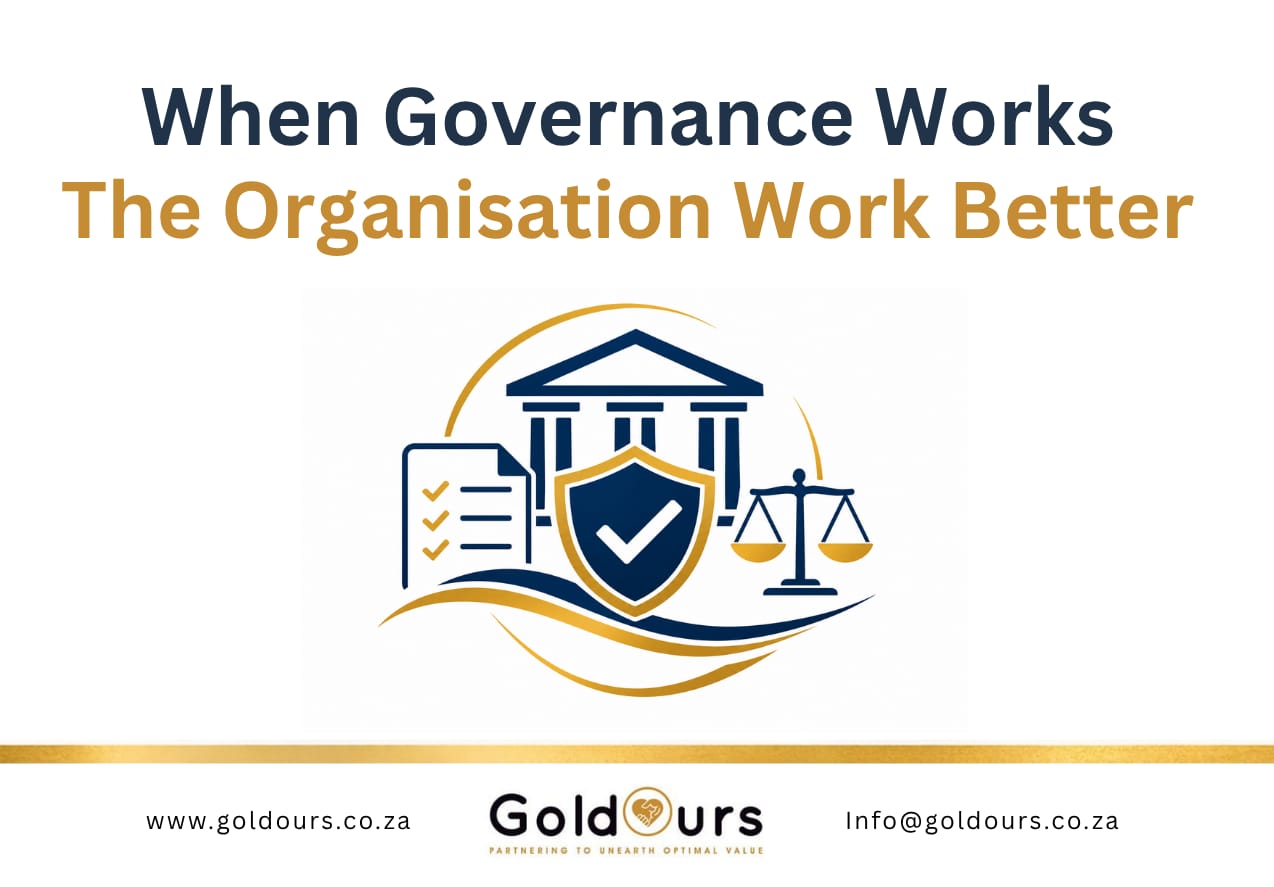
When Governance Works, the Organisation Works Better
Governance is often discussed in terms of structures: Boards, committees, policies, delegations, risk registers and reporting cycles.
All of these matter. But they are not the end point.
The real test of governance is whether it helps an organisation make sound decisions, manage risk, clarify accountability and execute effectively.
That is why governance problems often become visible first in the day-to-day running of the organisation. Decisions take too long. The same issues return to meetings. Senior leaders are drawn into matters that should have been resolved elsewhere. Reporting grows, yet insight does not. Controls accumulate, but delivery becomes harder.
These are operational symptoms, but they may point to governance weaknesses underneath.
Over the past few weeks, we have looked at four areas that often reveal whether governance is enabling performance or creating friction: operational friction, board reporting, decision rights and organisational learning.
Taken together, they offer a practical way to assess how governance is working in reality.
Start with what repeatedly gets stuck
Governance problems do not always appear in formal reviews.
They are often easier to see in the points where the organisation struggles to move.
A decision that is repeatedly escalated may indicate unclear authority. A recurring delay may reveal a control or approval process that no longer serves its purpose. An issue discussed by several committees may point to overlapping mandates.
The important shift is to stop treating recurring friction as a series of unrelated incidents.
Patterns are information.
If the same kinds of problems keep appearing, it is worth asking whether the system itself needs attention.
Reporting should support judgment
Board reporting is another important indicator of governance quality.
A board can receive large volumes of information and still lack a clear view of what matters.
Good reporting should help directors understand not only what happened, but why it happened, what has changed, what risks are emerging and what decisions may be required.
It should also make recurring issues visible.
A reassuring report is not necessarily a useful report. The stronger question is whether the reporting helps the board exercise judgment.
If an important problem were beginning to emerge, would the current reporting system allow the board to see it early enough?
Decision rights affect execution
Many organisations experience decision-making delays without explicitly recognising them as a governance issue.
Yet unclear decision rights can slow execution substantially.
People are unsure who has authority. Decisions are escalated unnecessarily. Too many people are consulted. Accountability becomes blurred because responsibility is shared widely.
Clear decision rights do not mean removing oversight. They mean making it clear which decisions belong at which level, who has authority to make them, who must be consulted and who is accountable for the outcome.
When those distinctions are clear, organisations move with greater confidence.
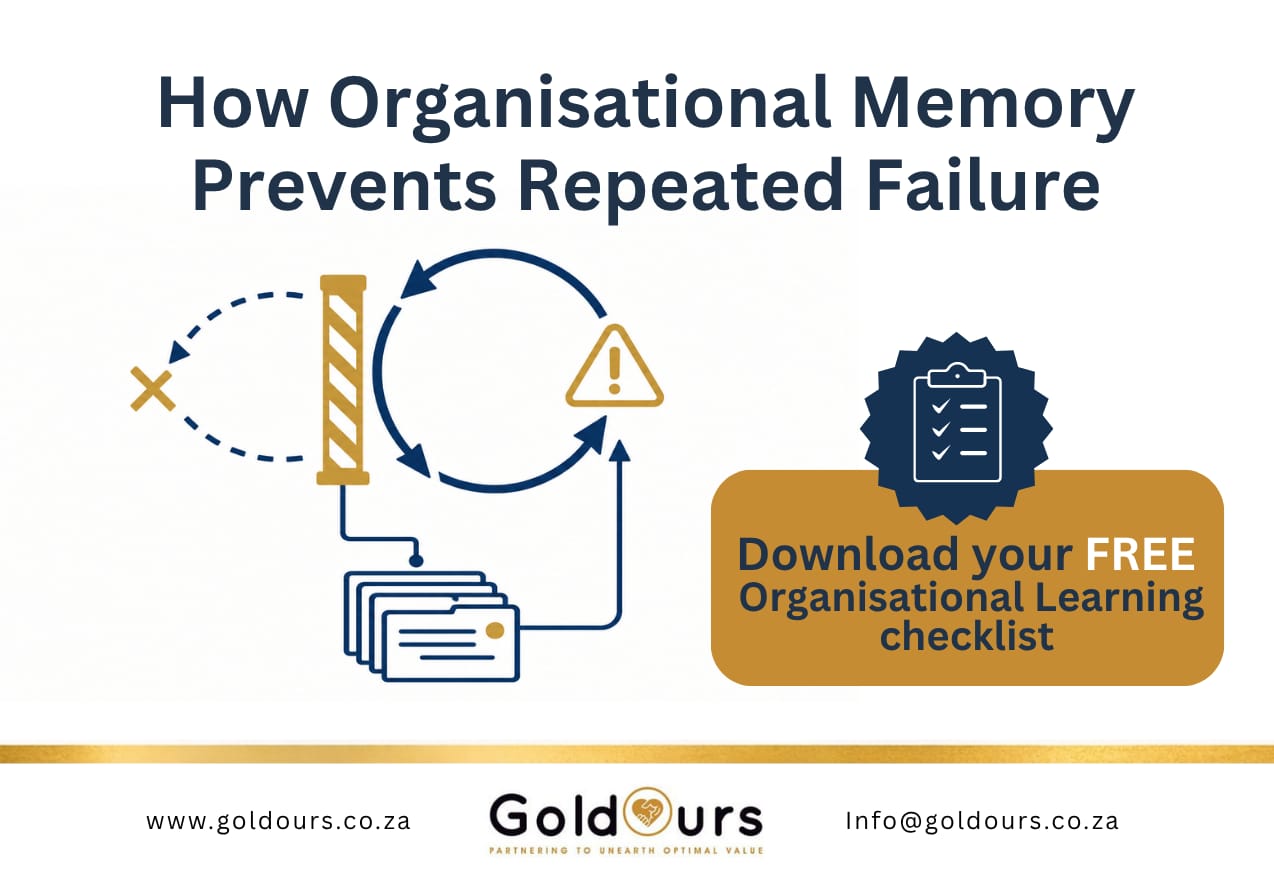
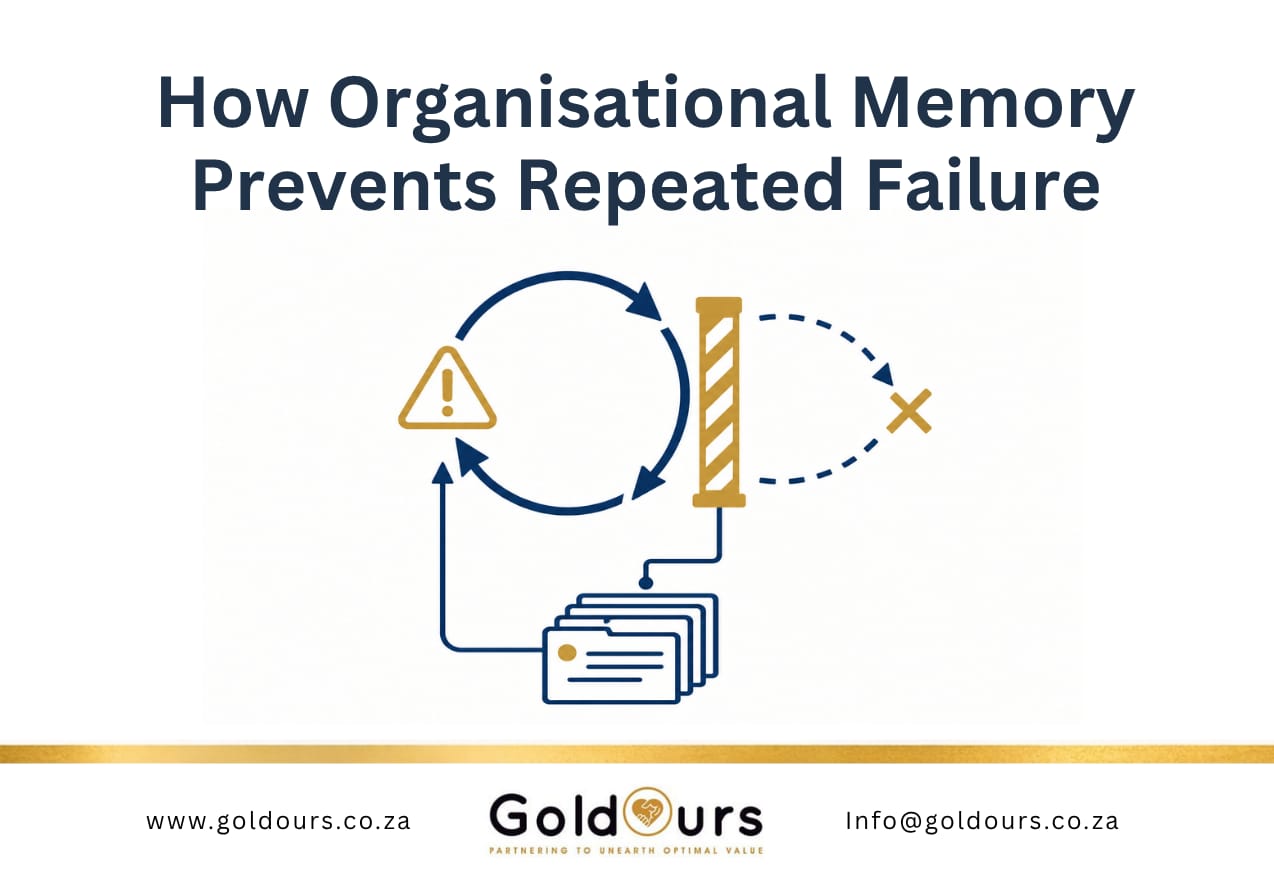
Learning is part of governance
Governance should also help organisations learn.
Repeated failures, recurring audit findings, repeated project delays or the same risks appearing in different parts of the organisation are not simply operational concerns.
They are signals about whether the organisation is retaining and applying what it has learned.
The question is not only: What went wrong?
It is also: What did we learn, what changed as a result, and why has the issue returned?
Strong governance should make learning visible in future decisions, controls, processes and behaviour.
Governance needs to be judged in practice
An organisation can have strong policies, well-drafted terms of reference, formal delegations and regular reporting and still struggle with how governance works in practice.
That is why governance effectiveness needs to be assessed in terms of outcomes.
- Does it create clarity?
- Does it improve judgment?
- Does it align authority with accountability?
- Does it help manage risk without creating unnecessary delay?
- Does it allow the organisation to learn from experience?
- And, ultimately, does it support execution?
These questions are more useful than simply asking whether governance structures exist.
Good governance should make the organisation easier to run
Governance should not create distance between oversight and performance.
It should connect the two.
When governance works well, boards focus on the issues that matter. Executives understand where authority sits. Teams know what decisions they can make. Reporting creates insight. Controls remain proportionate. Repeated problems trigger learning rather than another cycle of reaction.
The result should not be more governance activity.
It should be a better-run organisation.
GoldOurs Perspective
Good governance is not measured by how many committees meet, how many reports are submitted or how many controls are in place.
It is measured by whether the organisation is able to make better decisions, manage risk appropriately, clarify accountability and execute effectively.
GoldOurs works with boards, councils and executive teams to examine how governance operates in practice and where decision-making, reporting, accountability, controls and organisational learning may need attention.
Governance is most effective when it helps the organisation work better.