
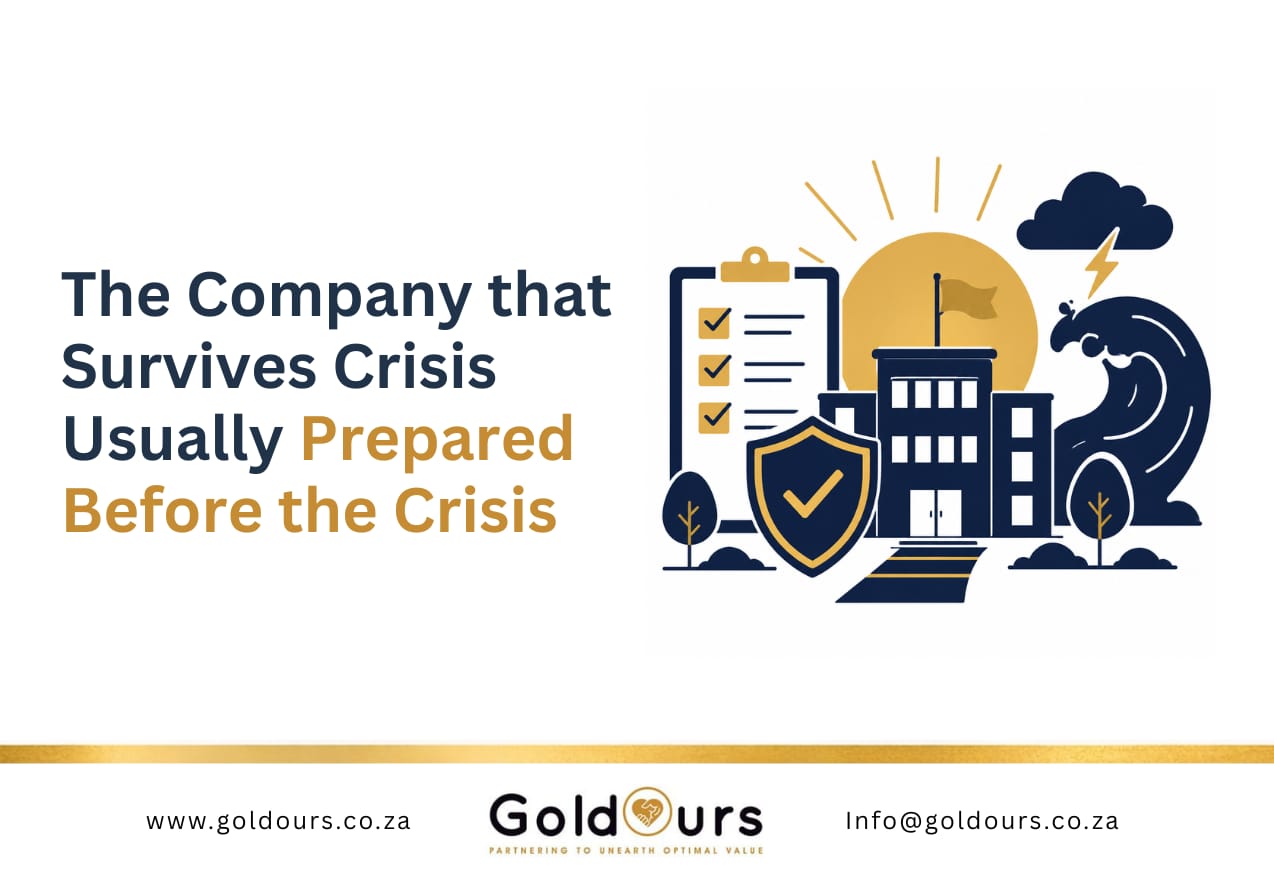
Companies that survive crises usually prepared before the crisis
A cyberattack. A regulatory investigation. A reputational incident. Supply chain disruption.
Economic uncertainty.
While the event itself may be unexpected, organisational resilience is rarely accidental.
The organisations that recover fastest are usually the ones that invested in preparation before they needed it.
Risk is more than compliance
Too many organisations still treat risk management as an annual exercise. Risk registers are updated. Controls are reviewed. Compliance requirements are completed. Then the documents are filed away until next year. This approach satisfies governance obligations. It does not necessarily improve organisational resilience. Strategic risk governance asks a different question:
"Are we genuinely prepared if this risk becomes reality tomorrow?"
Preparedness creates options
When organisations actively manage strategic risks, they gain something invaluable during a crisis: Options.
Leadership knows who makes decisions. Communication protocols already exist. Critical risks have been prioritised. Business continuity plans have been tested. Stakeholders receive consistent information.
Instead of reacting emotionally, organisations respond deliberately. That difference often determines whether a crisis becomes temporary disruption—or long-term damage.
Risk governance is a leadership discipline
Resilient organisations do not predict every crisis. They prepare leadership to manage uncertainty. They regularly review emerging risks. They challenge assumptions. They learn from near misses. They conduct simulations. They integrate risk discussions into strategic planning rather than treating them as compliance activities.
Risk becomes part of everyday leadership—not an isolated governance function.
Resilience is built through practice
The strongest organisations understand that resilience behaves much like organisational capability. It improves through repetition. Scenario planning. Cross-functional collaboration. Independent assurance. Continuous monitoring. Lessons learned.
Each strengthens an organisation's ability to respond when unexpected events occur.
The GoldOurs Perspective
GoldOurs believes effective governance extends beyond preventing problems. It builds organisational confidence to navigate uncertainty.
Strategic risk governance equips leadership with the visibility, structures and decision-making discipline needed before crises emerge—not after they have already disrupted operations.
Because resilience is not measured by avoiding every challenge. It is measured by how prepared an organisation is when challenges inevitably arrive.