
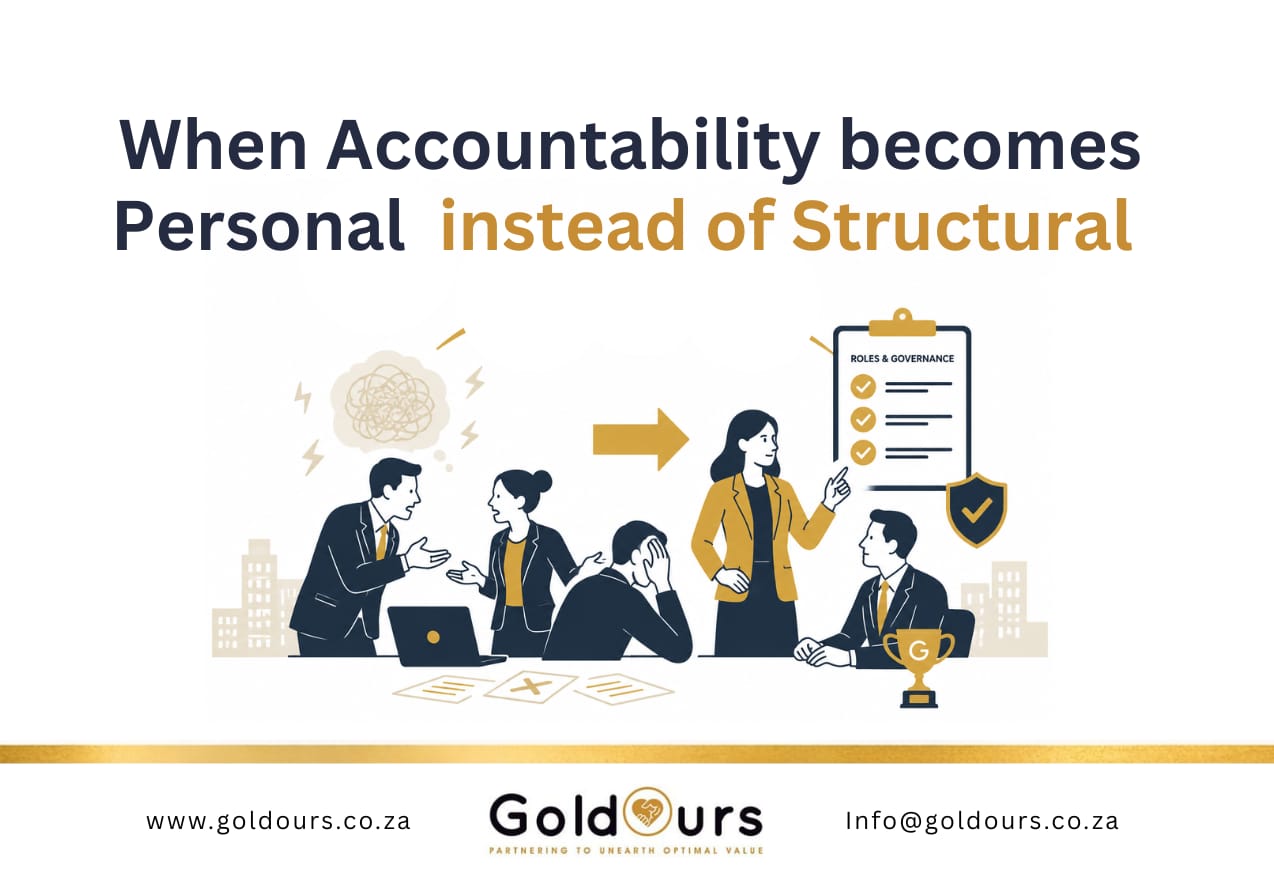
When accountability becomes personal instead of structural
Organisations struggle when people become the process instead of the governance system.
When something goes wrong, many organisations immediately ask: "Who's responsible?" It's an understandable question. But often it's the wrong one.
Strong governance isn't designed to identify people to blame. It's designed to ensure responsibilities are so clearly defined that failures become less likely in the first place.
The accountability trap
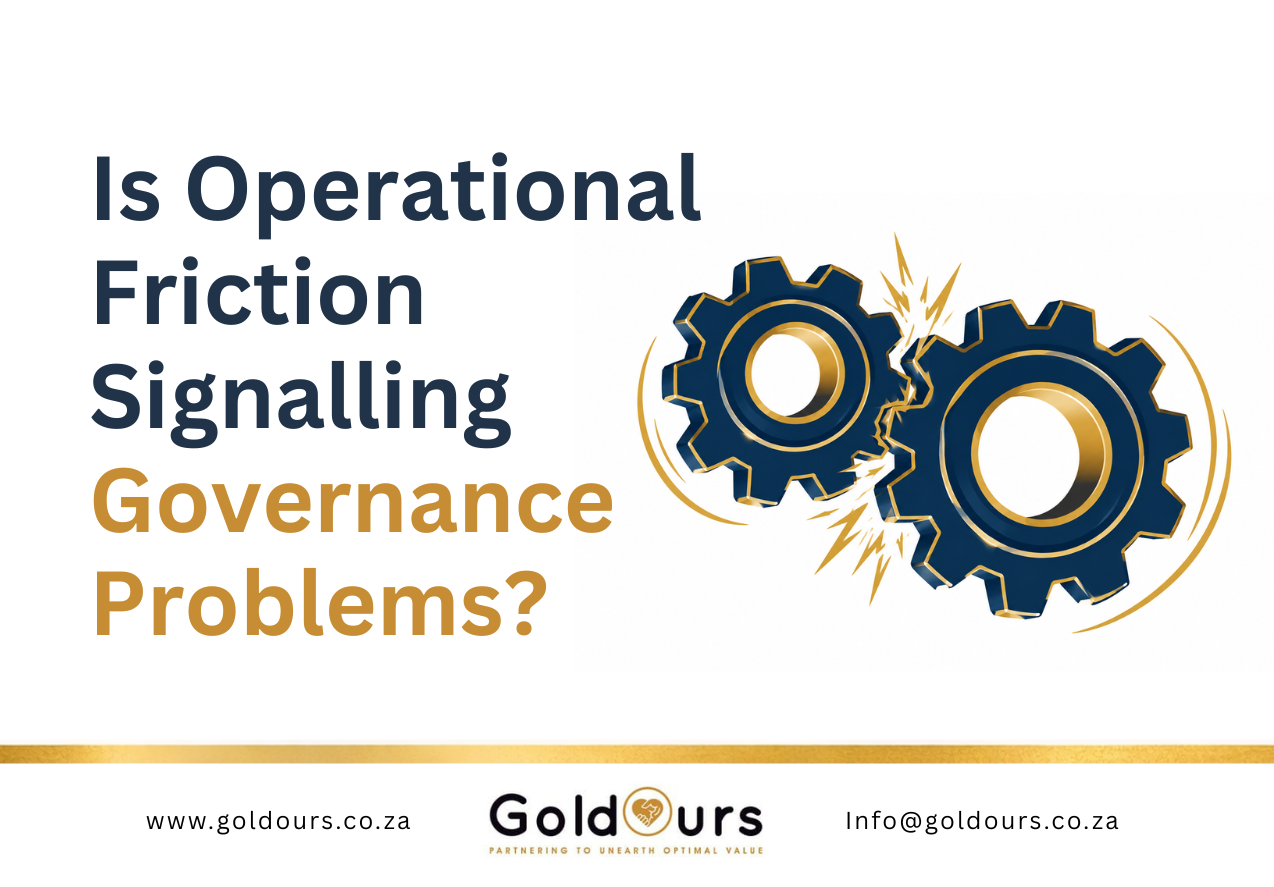
Many leadership conflicts are mistaken for personality clashes. In reality, they often emerge because governance responsibilities are unclear. When decision rights overlap ... Executives begin making operational decisions that belong elsewhere. Boards become involved in management.
Managers escalate issues that should be resolved within their own authority. Committees duplicate one another's work. Eventually, frustration replaces collaboration. Individuals become defensive because expectations were never clearly defined.
Governance should remove ambiguity
Good governance provides clarity before conflict arises. Everyone understands:
- - Who decides.
- - Who advises.
- - Who executes.
- - Who provides oversight.
- - Who is ultimately accountable.
This clarity reduces duplication, accelerates decisions and strengthens organisational trust.
Without it, accountability becomes personal. With it, accountability becomes structural.
The cost of undefined roles
Organisations often underestimate how expensive governance ambiguity becomes. Decisions slow down. Meetings become longer. Approvals multiply. Projects stall. Relationships deteriorate.
People begin protecting themselves instead of serving organisational objectives. Ironically, many organisations respond by introducing even more controls—adding complexity rather than resolving the underlying governance issue.
Governance creates confidence
Role clarity is not about restricting leadership. It enables leadership. When everyone understands their governance responsibilities, leaders spend less time negotiating authority and more time creating value.
Boards govern. Executives lead. Management delivers. Assurance functions provide confidence.
Each contributes differently—but all contribute together.
The GoldOurs perspective
At GoldOurs, we help organisations move beyond individual accountability towards governance systems that create clarity, confidence and alignment.
Well-designed governance frameworks reduce unnecessary conflict because expectations become transparent, responsibilities become measurable, and leadership becomes more collaborative.
When accountability depends on personalities, organisations become vulnerable. When accountability is embedded in governance, organisations become resilient.