

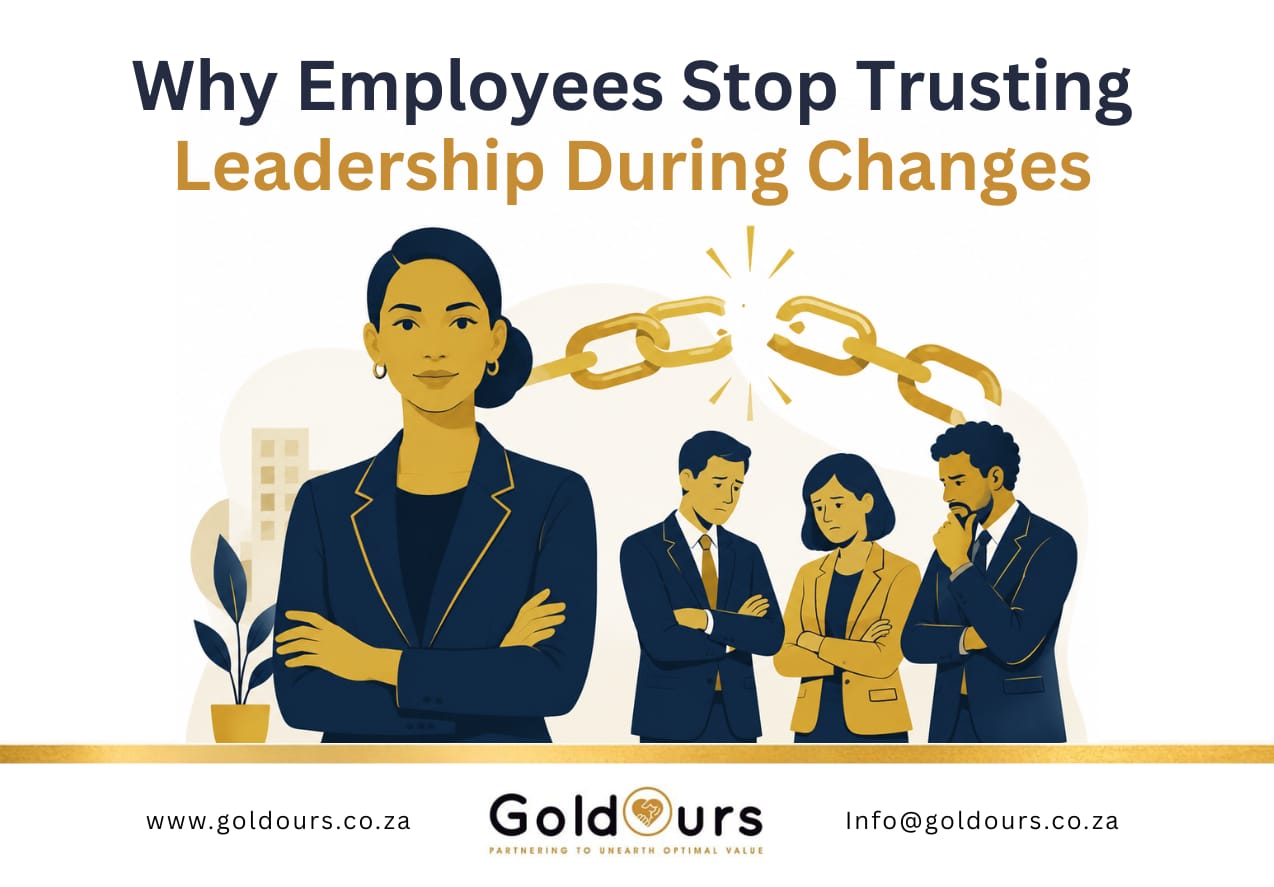
Why employees stop trusting leadership during change
Change is an inevitable part of organisational growth. Whether driven by restructuring, digital transformation, market pressures or evolving customer expectations, organisations must continually adapt to remain competitive.
Yet while leaders often focus on the mechanics of change, employees experience something very different.
They experience uncertainty.
When uncertainty is not managed well, trust begins to erode. Once trust is lost, even the most carefully planned change initiatives can encounter resistance, reduced productivity and declining morale.
The success of organisational change depends as much on leadership credibility as it does on strategy.
Trust is built on transparency
Employees rarely expect leaders to have all the answers. What they do expect is honesty.
During periods of change, people want to understand what is happening, why decisions are being made and how those decisions will affect them.
When communication is inconsistent or information is withheld, employees often fill the gaps themselves. Rumours spread, assumptions become accepted as fact, and confidence in leadership begins to diminish.
Transparency does not eliminate uncertainty, but it creates confidence that people are being treated with respect.
Consistency matters as much as communication
Trust is also shaped by what leaders do, not only by what they say.
When decisions appear inconsistent, policies are applied unevenly or commitments are not honoured, employees begin to question whether the organisation's values genuinely guide leadership behaviour.
Consistency demonstrates fairness.
It reinforces that governance structures exist to support equitable decision-making rather than individual preference.
Over time, this consistency becomes one of the strongest foundations of organisational trust.
Ethical leadership creates psychological safety
Periods of change often require difficult decisions. Restructures, role changes and new ways of working can create anxiety across an organisation. Ethical leadership does not avoid these conversations. Instead, it approaches them with empathy, integrity and accountability.
Employees are more likely to support difficult decisions when they believe those decisions have been made fairly, communicated openly and implemented consistently.
This creates psychological safety—the confidence that concerns can be raised without fear and that leadership will respond honestly.
Governance supports trust
Good governance is often associated with compliance and accountability. Less recognised is its role in building trust.
Clear decision-making processes, defined responsibilities and transparent communication reduce uncertainty during change.
They help employees understand not only what decisions have been made, but also how and why they were reached.
Governance creates confidence that change is being managed thoughtfully rather than reactively.
Leading change that people believe in
Successful organisations recognise that change is ultimately about people.
Strategies may be developed in boardrooms, but they are implemented by employees who need confidence in the leaders guiding the journey.
When leadership is transparent, ethical and consistent, trust becomes a catalyst for change rather than a casualty of it.
At GoldOurs, we believe that successful transformation is built on more than project plans and timelines. It requires governance, ethical leadership and communication that inspires confidence at every stage of the journey.
Because when people trust their leaders, they are far more willing to embrace change together.